
Smash Your Writer's Block
The Retreat Won’t Fix You (But the Project Might)

I’ve seen some videos lately that have made me anti-retreat.
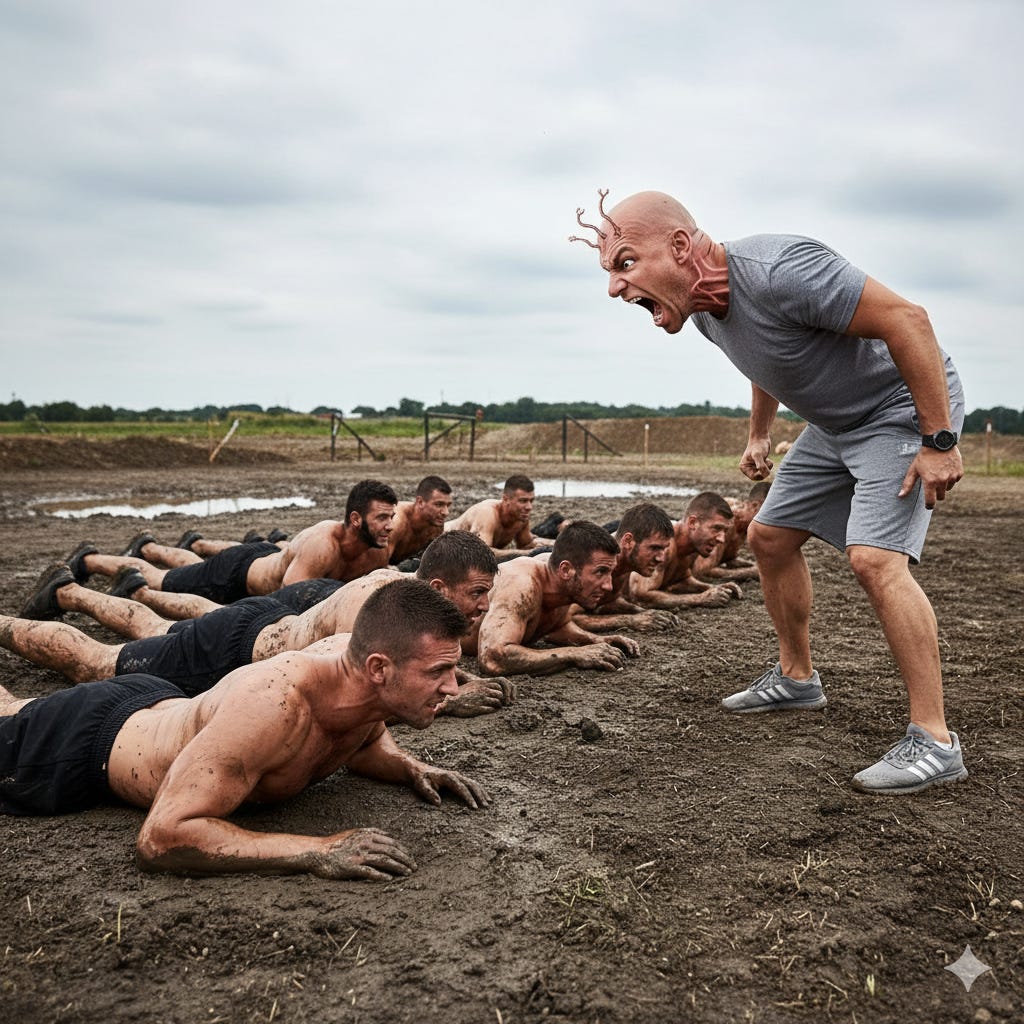
You’ve seen them too. A cinematic reel of shirtless men climbing rocks at sunrise, slow-mo shots of bonfires and brotherhood, a guy in linen pants talking about “the warrior’s path” like he invented it.
Retreats used to be a good thing. A weekend in nature, a moment to reset, maybe even a chance to rediscover some quiet conviction.
But retreats, like fitness and finance, have been co-opted by Instagram influencers who sell manhood like it’s a luxury item. They offer the kind of confidence you can lease for $3,000 and a plane ticket to Bali.
They frame themselves as guides and mentors. And they’re tapping into a very real crisis: insecurity and loneliness among men.
A lot of men—especially creative ones—don’t have a real community. The old frameworks of friendship and brotherhood are in in a state of flux.
So these “mentors” swoop in, promising connection and initiation: Come with us. You’ll remember what it means to be a man.
But what they’re really selling is the permission you won’t give yourself.
I write this with compassion, because I’ve been there, too.
There was a time I would’ve clicked that ad too. The one with the slow music, the glowing testimonials, the promise that everything you hate about yourself could be burned away in a weekend in the woods. Or ten days in Bali.
I understand that feeling. The low-frequency hum of inadequacy that never shuts off. The paranoid conviction that everyone else has it figured out. That maybe the problem isn’t your habits or your unfinished projects, but that you’re somehow missing a secret ingredient.
But the confidence you’re looking for doesn’t come from group chants, ice baths, or Spartan challenges.
It comes from keeping your word to yourself.
From finishing something you started.
It could be small. Like finally finishing that short story you plotted two years ago. Editing the script you abandoned. Sketching every day for a month.
Or it could be practical. Building a side project, learning a new skill, fixing your finances.
Every time you finish something, you strengthen the muscle that retreats only simulate: self-trust.
You start believing the words that come out of your own mouth.
Because that’s what real masculinity, or just real adulthood is. The quiet, unglamorous act of doing what you said you’d do.
The retreat scam works because it offers a shortcut. The retreat promises transformation in a weekend, or 10 days if you go to the more expensive ones in a foreign country.
The creative path demands commitment over a lifetime.
One is marketed as an experience. The other is a discipline.
When we talk about “stepping out of your comfort zone,” we picture something cinematic.
Jumping into a frozen lake, climbing a mountain, facing some primal challenge.
But most of the time, stepping out of your comfort is boring. It looks like:
Negotiating a raise with your boss.
Saying hi to the girl you see every morning at the coffee shop.
Having the hard conversation you’ve avoided for months.
Opening that old project file and facing the person you were when you quit.
That’s where the real discomfort is. In everyday moments where you risk rejection, vulnerability, or embarrassment.
That’s also where the real transformation happens.
I’m not saying all retreats are bad. Sometimes the reset helps. Sometimes you do meet people who genuinely want to grow.
But if you’re feeling the itch to “reclaim your life,” don’t start with your passport and your credit card.
Start with your notebook. Your camera. Your unfinished draft.
Start where you are.
The men in those ads aren’t better than you. They’re just more practiced at performing self-conviction.
You don’t need to buy a retreat to rebuild yours.
All you need is one promise you can actually keep.
Finish the story.
Build the thing.
Follow through once.
That’s the only retreat worth taking.
The one where you walk straight into your own discomfort, and walk out carrying proof that you’re becoming the person you promised yourself you’d be.
That's something I haven't done in a while and want to do again. I love Composition notebooks because I have this punk rock association with them, and writing fiction and it's a much better use of the Composition notebooks than for school 😀
Thank you for the great post!