
AI and the Lack Of Vision
An artist's take on thinking, building, and branding with AI


What AI Is (To Me)
I see AI as an enhancer, or an extender, of a creator’s vision. Think of how an exoskeleton can make a person easily pick up something multiple times the weight of the user.
AI can do that for you with some basic grounding:
Engaging with AI like a creative partner and a tool, and not just a tool
Direct and simple communication (if you don’t get what you want the first time, modify your prompt, add a reference image or doodle, or even add marketing instructions, like the audience you are making something for)
A vision you want to realize (even if you’re not clear on this, get started. The process of prompting and iterating the results will bring you clarity, or an unseen way to move forward)
I stress vision, because the tendency is to turn over everything to AI, and take whatever it gives you without adjusting it to what you as an individual want to accomplish, which is causing an understandable division of pro-vs-anti AI use.
Using AI without a vision, or at least a rough idea of what you want to accomplish makes you a slave to AI and erodes critical thinking ability. Skynet doesn’t need to send Terminators to your home to put you to work in the factories if you’re doing things with AI just because you want to do things. Skynet now has a psychological profile on you that it can use to stroke your ego while gently steering you to the slave labor camp.
My intro to AI
About a couple of years ago, I was blissfully indifferent to AI. I was seeing the debates about making certain jobs obsolete and the issues of copyright infringement on how AI learns, but not reacting in a strong way.
It wasn’t till I started seeing articles and stories about people creating children’s books and art paintings and passing them off as their own art made by hand that I took an active interest in the tech and the subject.
You could say I drifted to AI.
Till I discovered vibe coding, my use of AI was limited to research for post content, image generator, and marketing and branding assistant. Till recently, I lacked vision, but I was clear on one thing: I wasn’t going to do things because I wanted to be perceived as an artist.
My vision was to not be like the person I will write about next.
An example of anti-vision
James is probably sick of me sharing these videos with him, and now with you, but I am fascinated with how a certain “artist” gleefully uses AI to assemble different media and sells it to people, without bringing an ounce of his own personal artistic influences (if he has any), interests, or theories on making art — built over time, and earned with practice — into his creative process.
It’s both annoying and amusing how this individual is either unaware of, or in denial over how little of what he “creates” comes from his own imagination.
Annoying, because this is precisely the kind of person that supports the arguments of the people who are against the use of AI for artistic purposes. A parasitical, lazy, misguided being who jumped on a technology because he perceived a shortcut to accomplish something that he is pursuing for the wrong reasons.
Amusing because the results are hilariously bad.
To be clear:
I’m not writing this as an attack to humiliate this individual. (He’s doing that all by himself.) I haven’t doxed him or put his name here. (But I will include a couple of videos here and here by a YouTuber who has roasted him.)
I’m writing this to illustrate what the true divider is between using AI as an enhancer (or extender), and using it as a crutch.
Vision.
Or at least a rough idea.
New artforms are being born with this tech that’s available to anyone with a device and an internet connection. I intuit there is a use for AI for me that is greater than what I’ve been doing with it till now. I don’t know yet what that is, but I continue to get involved in conversations with AI as the subject. I’m feeling out the situation, sensing where my interest might connect with one of the many uses of AI, and the ones we can’t foresee where people mix and experiment with AI with other things.
I am being guided to AI from an idea of creating entertainment that makes you a participant, rather than a mindless spectator.
I am not leaping to use AI as art slave labor to generate things for me that have nothing of the creator’s identity behind them.
One suggestion
I see the posts here of marketers, copywriters, and brand consultants supporting the idea of solving a pain problem.
I am taking a pain problem from a few years ago and applying it to vibe coding to create an app that applies filters to photos that imitates the look of Lomography cameras. It’s a fun thing to shoot analog photography, but it can be an expensive hobby, so I like the idea of presenting an alternative for people in low economic spectrums.
Whether I succeed in creating this app I imagine or not is not relevant.
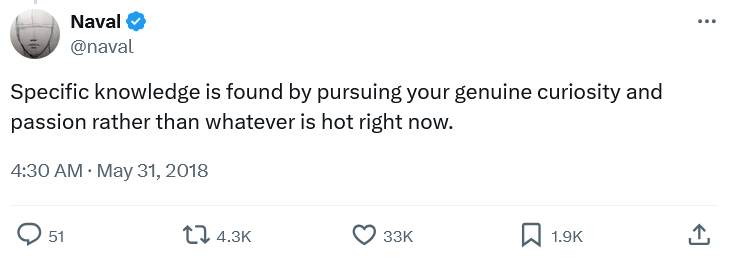
I am going to do something with AI that will either give me clarity, or point me to a possibility I haven’t seen. I am using AI to practice what Naval Ravikant calls specific knowledge.
End points
If you don’t have an opinion on AI, that’s ok. Don’t feel pressured to have one just to appease a friend or colleague. The subject is vast, complex, and ever-evolving (I’m not getting into the subject of AI causing depression and distress because of people using it as a therapist.)
If you’re on the fence on AI, experiment with it. Get involved in the subject. (There’s a lot of people here building cool and useful things with it.) Find something basic and fun you can do with it. Let curiosity guide you into unexpected and unknown places.
You might find vision there.
 | A guest post by
|